Decoded
Free-to-Play, Premium, Subscription: What Each Business Model Wants From Your Evening
Every model has to survive. That is what you feel in the design.
Photograph: Unknown · CC BY-SA 3.0 · Wikimedia Commons
The takeawayYou read a game's design and predict what it will ask of you and what it will cost.
Every game business model is built to optimize a different relationship with player time and money. The differences show in the first hour, when a free-to-play game's design starts hinting at the microtransactions to come, and a premium game simply opens, with nothing held back behind a timer.
The different ways that games are monetized—in small purchase bundles, subscription fees, a one-time front price, or the yield of microtransactions—determine what your evening of playing will have in store: what you are shown first, where you are made to wait, and what you are asked for at the point where you are most invested.
Free-To-Play vs. Premium vs. Subscription: What to Expect
The game business uses a few basic business models, each of which is structured around how it earns money from players.
Free-to-play games monetize by selling optional in-game purchases rather than charging an upfront price. They rely on long term retention, the practice of keeping you coming back over time.
Subscription games earn money by charging a subscription fee for as long as a player subscribes. Their design problem is the renewal date: content has to keep arriving at a pace that makes the next month feel worth paying for.
The premium business model in gaming is a full game sold for a price, and the player can access it all throughout without spending more money on it. No subscription features or optional purchases are usually built in.
To put it another way, cash comes late in the free-to-play model, in time with your ongoing play, because it relies on in-game purchases. In the subscription model, payment comes early and recurs in the future, because it is based on subscription. And in the premium model it comes once, before you have played at all.
Those business plans are not neutral; they affect the game design, including how much of the game you get to start playing and how long you get to play for in each session.
How Free-To-Play Games Shape the First Hour of Play
Many free-to-play games are built around activities that limit and control the player's session, and are designed to slowly capitalize on your engagement by indirectly encouraging players to buy. Over time, developers learn to thread a needle between offering a fulfilling game, and limiting the player's access to it unless they buy.
Some free-to-play games use social reward systems, where you compete and coordinate with friends to have enough collective effort to progress in the game. Players are also encouraged to show up and spend to support their friends. Once a player starts playing regularly, it is typical to receive messages encouraging them to come back before a timer expires, incentivizing regular sessions.
Retention is vitally important to free-to-play, because a player who only plays once has no opportunity to spend. So the design tends to open generously and then meter the pace: progression on a timer, resources made scarce, and rewards delivered unpredictably rather than on completion. A 2023 study found that lowering difficulty can increase both retention and spending in the short and long term.
For many free-to-play games, the number one feature that stands out for the player is the feeling of needing to spend. But the game usually doesn't say that directly. Instead, for free-to-play audiences, the resentment often builds over time as the game slowly reveals the necessary spending to unlock progress and chase entertainment. Because the money arrives over months rather than at purchase, the offer tends to appear at the point where you are most engaged rather than at the point where you are least.
What a Premium Purchase Buys You
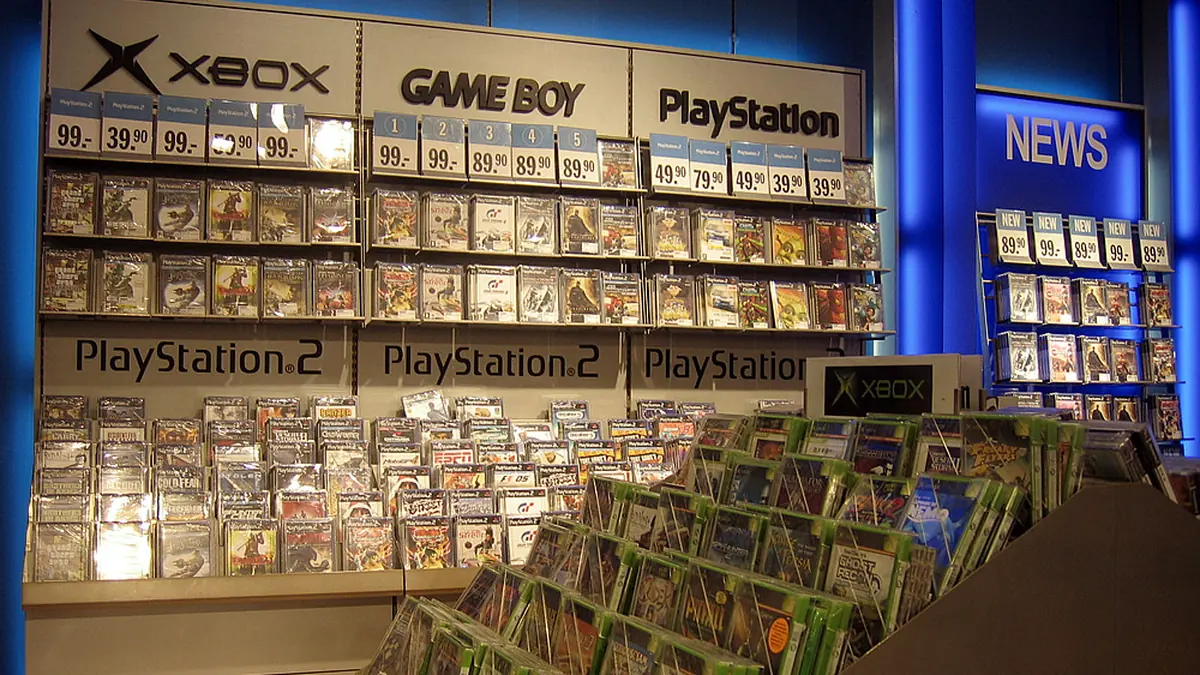
In the premium model, you pay for the game as a whole as you download it, and, except for sold-in pre-launch downloadable content, you aren't asked to spend anything at all. Premium games are unique in that most of the front-end barriers to play have already been removed at the time a player purchases the game, compared to free-to-play and subscription games, where the player is asked to spend over time. So in the premium model the first hour is the game itself, with no expiry and no gate waiting further in. If what you play for the first hour satisfies, you're able to play, and purchase, instead of hitting an invisible or deliberate limit and being shown advertisements.
Premium games are not necessarily more expensive than the other models in the long run, and often turn out to be more affordable or on par with a year of spending on a subscription or a free-to-play game. Premium games succeed when they provide entertainment for a long period of time, without any screen reminding you of an upcoming spending event. The risk sits with the publisher instead: almost all the revenue arrives in the first weeks, and after that the choice is between selling additional content to the people who already bought, or cutting the price to reach the people who did not.
Players who choose premium games can anticipate not seeing purchasing prompts and the full game, but they are expected to pay in full for all the play they'll want to engage in, up front at purchase, without subscription or trial or introductory content with an expiration. Premium games don't have lower pricing for longer subscriptions, and they don't typically offer passes, seasons, or free trials.
How Subscriptions Keep Players Paying, and Profitable
Games that charge a subscription often have a unique challenge: they have to keep the game growing, and making it worthwhile for long-term customers to keep paying, over and over. This means offering lots to make the game compelling, featuring new models or levels, but also interweaving mechanisms that show that paying is a requirement for some of the game, while still making it accessible for new players. After all, online games are built not just to be profitable, but to keep pulling in new players.
The same 2022 Journal of Management Science paper studying these games found a few important takeaways. One was that to grow as fast as possible, games prioritize growth by offering the game entirely free at first, spending more money on early advertising, but then applying a paywall layer over the content, to separate those who pay from those who don't, just as their early subscriber excitement runs out. Another important finding was that these games favor social-comparison effects, rewarding participants who spend or achieve more to preserve their social position. Matchmaking systems that match players by how much they pay for the game can be a tool for monetization, as can cosmetic rewards and social gifts that are only available for a price.
Games with subscriptions often have a core free-to-play, that's augmented by time-limited features, giving players a limited-time subscription, and drawing the opportunity to play the whole game, or to participate, on a subscription regimen. This creates a little tension and immediacy, for long-term retention of the game, and the long-term retention of paying players. It's easier for subscription games to justify a richer game in this model, especially compared to free-to-play games. Subscription games rely on creating a consistent income from starting players, but they are able to offer a more unstructured game with no purchase walls, while keeping players spending through subscription purchases.
How Free-to-Play Game Design Tells the Difference
Some free-to-play games use markers beside the UI to show what things you can pay for. Restricted play is another cue that you are not seeing the whole game, and there are ways to buy more. After all, monetization is in the game, instead of on the outside.
Achievements that show your progress in the game are also a key marker, letting you see how you're doing, and how much more there is to do, if you're willing to buy it. The overall design of the game often entails scoring and leaderboards, and these are central to the play experience, and part of the game's attractiveness to some people.
Striking visual effects, bold colors, crowd behavior, and very clear rewards are all central to the play experience of free-to-play, holding up a marker to let you know how you can feel, course-correct, and identify the things available for purchase in the game. Free-to-play game design lets you play, but tries to show you what you can buy.
What Happens When the Economics Don't Add Up
While in the subscription or premium model, the game fails when players are not engaging, and the publisher started earning when you bought the game, in the free-to-play model, the publisher is likely earning more if you are playing but spending less, and only if you play frequently. This can create an incentive to keep a game online, but to limit its revenue targeting to those spending the most. When retention and monetization can't align, and when spending players can't be attracted, a publisher may choose to take a game into shutdown, or to change its pricing model, and monetize in a new way, or to charge a small fee to gain a premium membership.
Shutdown is also sometimes inevitable for a game that doesn't make revenue targets. This isn't because the game disappoints, but because the monetization has failed. Free-to-play games, in particular, tend to have solid timing gating, but a much larger and ongoing influx of new players, but these period of play can dry up as players ping-pong in and out, and promotions create one-time bulges, but no longer sustain long-term growth.
Reading the Cost of a Year of Play
Games are built to retain you and get you spending over a profitable period; the odds are that the bulk of the money a player puts into a game comes in over 12 months.
Comparing models as one year of playing is straightforward: premium games are bought once, with no later purchases. Free-to-play games start for free, and then ask you to buy limited purchases. Subscription models ask you to pay a subscription fee.
It's worth noting that beyond a year, both premium and subscription games limit their initial costs, while the free-to-play model may wish to keep you spending on in-game purchases. Subscription models have a distinct edge in not asking for a high initial cost, and allowing you to play much of the game for a single purchase, where free-to-play games ask you to spend multiple times. Premium games and subscription models share economic pressure to make the game long-lasting and engaging, while free-to-play have the benefit of each purchase feeling smaller, and their economic pressure is on publication day, or high for the first few months. However, those costs may compound in the free-to-play model, with automatic purchasing or assistance by fortune, or unfortunately, despite a greater feeling of control.
In conclusion, it's worth noting that games are built around their monetization. Free-to-play touts ease of access, to retain and to show its fragments before asking for later purchases. Subscription models ask you for initial play, then for repeat purchases, while offering you the most of the game, and still hoping you pay a long-term subscription, creating the right balance of value. Premium games, alone, offer something close to a full game, up front, and ask neither for a recurring subscription, nor for purchases in the game, hoping that the whole game is enough to keep you engaged.