
What it costs
What a Gaming PC Really Costs to Own for a Year
The meter, the parts that die, and the upgrade nobody budgets for.
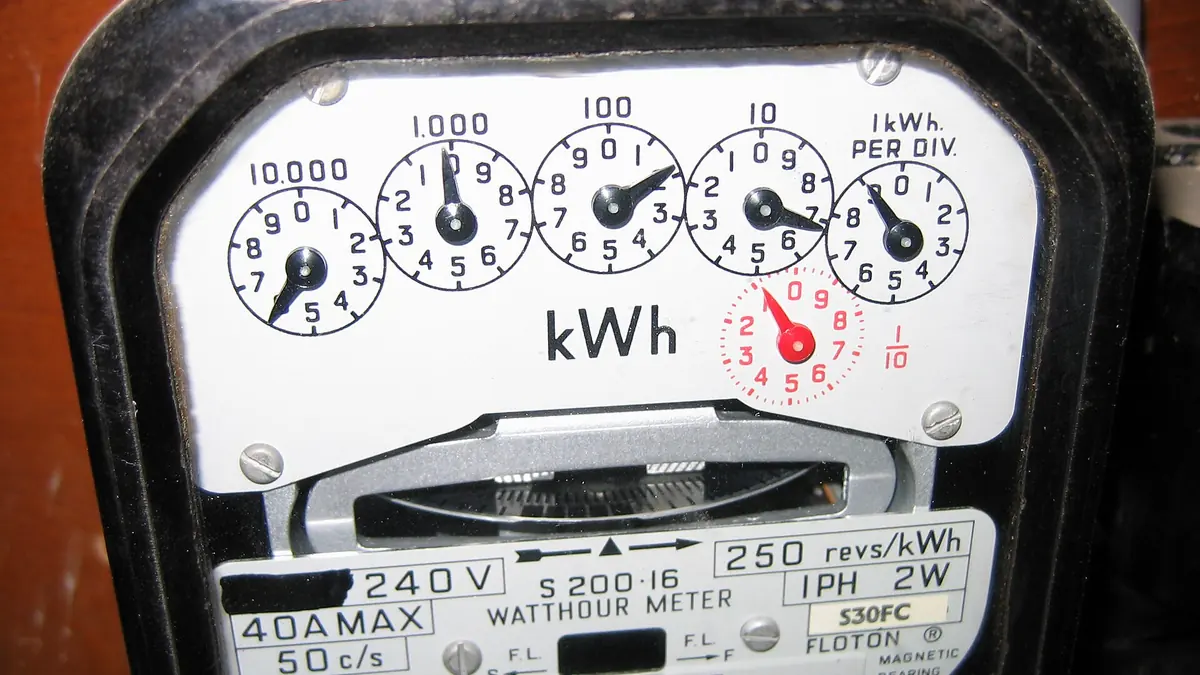
Photograph: Mike1024 at English Wikipedia · Public domain pd · Wikimedia Commons
The takeawayYou get a formula with your own numbers in it and know which cost to attack first.
You might enjoy gaming PCs for their high-performance, immersive experience, but you should also be aware of the costs associated with owning and running one. The electricity cost for a gaming PC per year, in particular, can vary significantly based on usage, efficiency of the components, and the local cost of electricity. Let's break down the core factors contributing to this expense.
The Core Formula
The electricity cost of running a gaming PC can be calculated using a straightforward formula:
(average watts × hours per day × 365) / 1000 × price per kWh
Where:
- 'Average watts' is the typical power draw of your gaming PC
- 'Hours per day' is the average number of hours you play or leave your PC on
- '365' converts the daily rate to an annual one
- 'Price per kWh' is a number you can find on your electricity bill
For example, a gaming PC running at 350 watts for 6 hours a day would draw 766 kWh per year. If the cost of electricity is $0.15/kWh, the annual cost would be:
(350 watts × 6 hours/day × 365 days) / 1000 = 766 kWh/y × 0.15$/kWh = $115 per year
The same calculation for a 450-watt PC running 4 hours a day at $0.17 per kWh would result in:
(450 watts × 4 hours/day × 365 days) / 1000 × 0.17$/kWh = 584 kWh/y × 0.17$/kWh = $112 per year
This formula highlights how both power draw and usage time significantly impact the annual electricity cost.
Gaming Draw vs. Idle Draw
A gaming PC's power usage varies significantly between gaming sessions and idle times. During gaming, a PC can draw between 300 and 500 watts, but when idle, the draw can be much lower, around 87 to 123 watts.
CPUs generally draw between 10 and 30 watts at idle, regardless of their TDP (Thermal Design Power) rating. However, the overall system draw depends heavily on the efficiency of the power supply unit (PSU).
For instance, a typical gaming PC can have a wall draw of:
- 87 watts idle and 366 watts load with an efficient PSU
- 123 watts idle and 486 watts load with a less efficient PSU
The significantly lower idle power draw means that leaving a gaming PC running continuously can add a noticeable cost, even if it's not actively gaming.
Real-World Examples
The annual electricity cost for a gaming PC can range from $92 to $230, depending on usage patterns. For a mid-range gaming PC running at typical power draws, costs are more likely to fall between $80 and $150 per year.
Here are a few real-world examples:
- A 350-watt PC run 6 hours daily at $0.15/kWh: $115 per year
- A 450-watt PC run 4 hours daily at $0.17/kWh: $112 per year
- A 400-watt PC run 4 hours daily at $0.15/kWh: $105.41 per year
These variations show that while estimates can provide a general idea, the actual cost depends heavily on specific circumstances.
What Actually Wears Out
While electricity costs are the most immediate expense, gaming PCs also have ongoing costs related to wear and replacement. Components like thermal paste and case fans wear out over time.
However, finding verified data on the service life of these components is challenging. Manufacturer warranties, MTBF (Mean Time Between Failures) specifications, and official service intervals provide some guidance, but these can vary widely.
Electricity Costs Matter More Than You Think
The cost of electricity varies significantly across regions and can greatly impact the annual cost of running a gaming PC. For example, the same 450-watt PC run 4 hours a day would cost:
- $112 per year at $0.17/kWh
- $148.63 per year at $0.23/kWh
- $94.45 per year at $0.12/kWh
This shows how crucial it is to know your local electricity rate when estimating costs. Even small variations in the rate can result in significant differences in annual expenses.
Light vs. Heavy Gamers
For light gamers who use their PCs for around 4 hours a day, the electricity cost will be the dominant factor in the annual cost of ownership. Using the formula, the annual cost can be roughly estimated based on power draw and electricity rate.
Heavy gamers who play for 6-8 hours a day will see their electricity costs climb. Additionally, components like GPUs may reach higher temperatures, potentially reducing their lifespan, although specific failure rates are hard to verify.
Conclusion
While a gaming PC can be a thrilling investment for immersive gaming experiences, understanding the ongoing costs is crucial. With the formula (average watts × hours per day × 365) / 1000 × price per kWh, you can estimate your annual electricity cost based on your specific usage and electricity rate. Balancing between optimizing efficiency, managing usage, and budgeting for upgrades ensures a more manageable and enjoyable gaming experience in the long run.

.jpg)